
Miami-Dade County · Florida
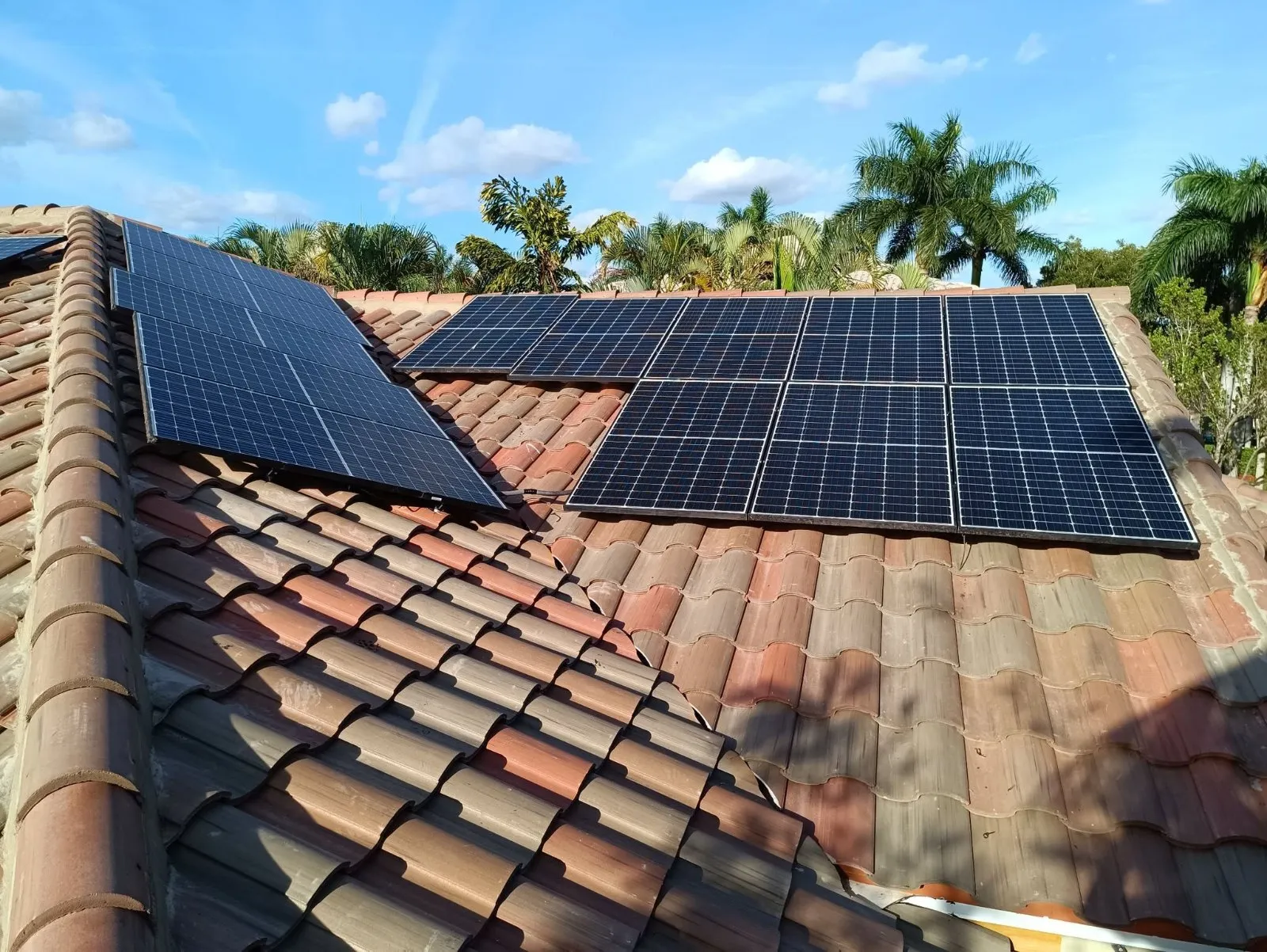
Solar panel removal, reinstall & repair in North Miami, FL
Most of North Miami's houses are block homes built in the 1950s and 1960s postwar boom. Keystone Point's island streets add waterfront homes on Biscayne Bay, where salt is part of every roof decision, and the whole city follows Miami-Dade's strict attachment rules.
✓Licensed & insured
✓Any roofer. Any installer. Any brand.
✓Orlando to Miami, one crew
✓Written quote before a panel moves
Home route
North Miami is on our weekly run
The crew works Orlando down to Miami every week, so North Miami gets normal scheduling, no travel charge, and a reinstall lined up with your roofer's tear-off date.
On the ground in North Miami
Permits, power and roofs in North Miami
Originally the Town of Arch Creek in 1926, the city took the North Miami name in 1931 and grew quickly after the war, so the typical house is single-story concrete block with a low hip roof and barrel or flat tile, or a flat roof behind a parapet. On those flat roofs, racks are bolted down through sealed bases, and every penetration gets its own inspected detail. Keystone Point is a group of islands off Biscayne Bay with canal lots and larger homes, and Sans Souci and the other bayside streets face the same salt. The city issues its own building permits, and FPL is the utility. Miami-Dade's Notice of Acceptance system, tightened after Hurricane Andrew, controls which mounts can go on any roof here. Oleta River State Park and the FIU Biscayne Bay campus anchor the northeast.
On Keystone Point's canal lots and the bayside streets of Sans Souci, waterfront houses with arrays on tile usually need stainless replacements for clamps and lugs at reinstall. In Arch Creek Highlands and Alhambra Heights, the common situation is a 1950s house with a flat or low-slope roof where an older array's mounts are the first suspect when a ceiling stain appears. Near Golden Glades, smaller homes carry modest systems whose installers are gone.
Local details
North Miami at a glance
- Power company
- FPL
- County
- Miami-Dade County
- Region
- South Florida
- Hurricane zone
- High-Velocity Hurricane Zone: product-approved attachments, permitted and inspected.
- Near the water
- Salt air: every rail, clamp and grounding lug gets checked before anything goes back up.
Before you book
Worth reading first
FAQ
North Miami: questions homeowners ask
Do you remove and reinstall solar panels in North Miami?
Yes, every week. North Miami is on our Orlando to Miami route, so it is normal scheduling with no travel charge, and the reinstall is lined up with your roofer's tear-off date.
Who can pull the permit to reinstall solar in North Miami?
Only a licensed solar or electrical contractor. North Miami is inside Florida's High-Velocity Hurricane Zone, so every attachment needs documented product approval and the reinstall is inspected before the system comes back on.
Who reconnects the system in North Miami?
Homes in North Miami are generally served by FPL. When an array goes back on after a roof job the utility usually needs to know, and the building department normally inspects the reinstall before the system is switched back on.
Does salt air change the job in North Miami?
It changes what fails first. Salt attacks rails, clamps and grounding hardware long before it hurts a panel, so near the water every fastener gets checked and anything corroded is replaced rather than reused.
Also in South Florida
More pages near North Miami
Get a quote
Get a written quote in North Miami
The address, roughly how many panels, who installed them if you know, and what is happening. A photo of the array from the street and one of the inverter get you an accurate number fastest, and texting them is the quickest way to send them.
Solar help in North Miami
Licensed and insured. Any brand, any roofer, any original installer.